Concrete Slab & Foundation Work
Your building project deserves a solid foundation that will support it for generations to come.
Why Your Foundation Matters More Than You Think
Every structure needs a solid foundation, whether you are building a new home, adding a room, constructing a garage, or erecting a commercial building. The foundation supports everything above it and transfers that weight safely to the ground. When foundation work is done right, you never think about it. When it is done poorly, you deal with problems for years. Cracks in walls, doors that will not close properly, and uneven floors all trace back to foundation issues.
In South Florida, we face unique foundation challenges. Our sandy soils, high water tables, and occasional heavy rains require specific techniques and materials. A foundation that works perfectly in another part of the country might fail here within years. That is why you need contractors who understand local conditions and follow proven methods for our climate and soil types. We have poured foundations throughout Plantation and Broward County, and we know what it takes to create lasting results.
Concrete slab foundations are the most common choice for residential and many commercial projects in our area. They work well with our soil conditions, resist moisture better than crawl spaces or basements, and cost less to install than other foundation types. A properly engineered and installed slab foundation can support your structure for the life of the building. This makes investing in quality foundation work one of the smartest decisions you can make as a property owner.
Understanding Different Types of Slab Work
Slab-on-Grade Foundations
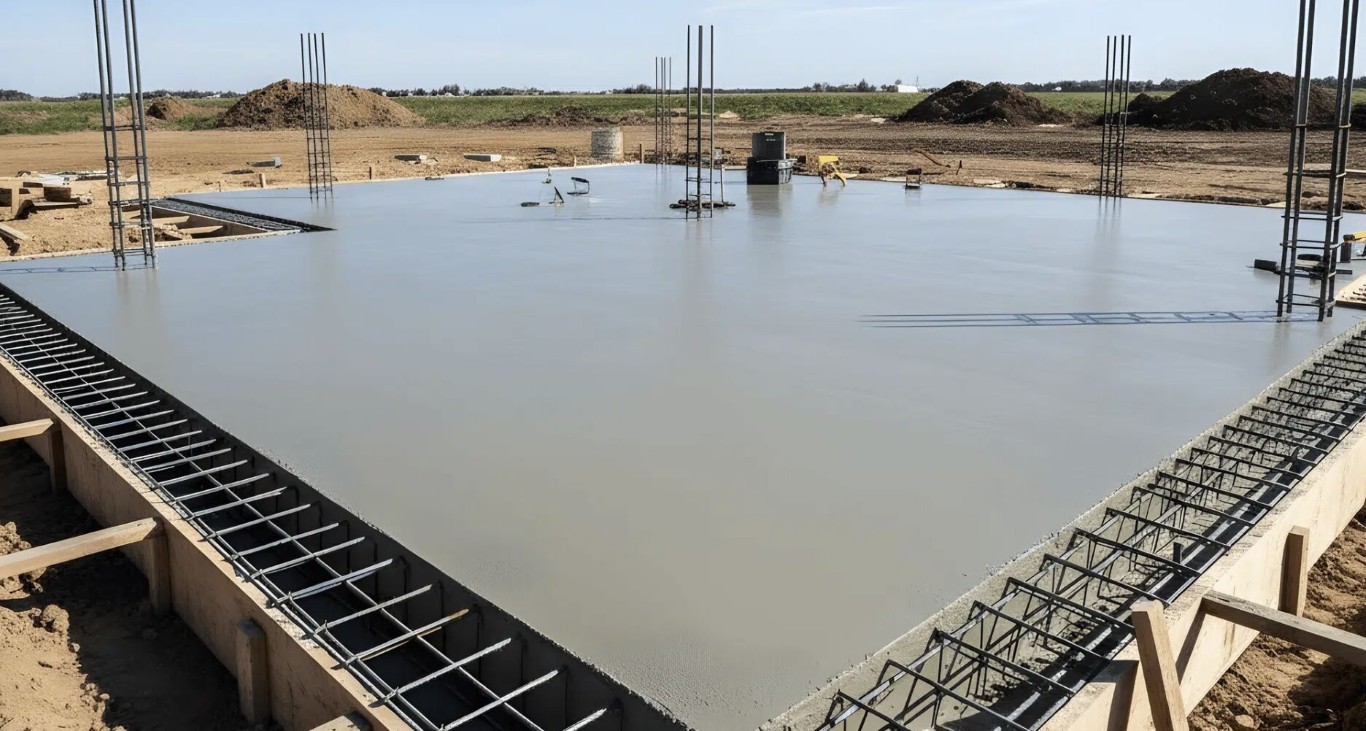
These foundations sit directly on prepared ground with no space beneath. They are the most economical option and work well for single-story structures, garages, sheds, and many commercial buildings. The slab serves as both foundation and floor, which simplifies construction and reduces costs. We typically pour slab-on-grade foundations 4 to 6 inches thick with proper reinforcement. The edges are thickened to provide extra support where walls will sit.
Monolithic Slabs
A monolithic slab combines the foundation and footing in one single pour. This creates a strong, integrated structure that handles our soil conditions well. Monolithic slabs work particularly well for residential construction and smaller commercial projects. They require less labor than traditional slab and footing combinations, which can reduce costs while maintaining structural integrity. The key is proper site preparation and correct concrete placement techniques.
Post-Tension Slabs
For larger buildings or problem soils, post-tension slabs provide extra strength and crack resistance. Steel cables run through the concrete and are tensioned after the slab cures. This creates compression that helps the slab resist cracking and movement. Post-tension slabs can span longer distances without support and adapt better to minor soil movement. They cost more initially but offer superior performance for challenging applications. Many commercial concrete projects benefit from post-tension construction.
Our Foundation Installation Process
Quality foundation work follows a specific sequence that cannot be rushed or shortcut. Each step builds on the previous one, and skipping or doing any step poorly compromises the entire foundation. Here is how we approach every foundation project:
- Site evaluation and soil testing: We assess soil conditions, drainage patterns, and any factors that might affect the foundation. This often includes soil bearing tests to determine load capacity.
- Engineering and permitting: We work with engineers to design a foundation that meets building codes and handles your specific load requirements. We obtain all necessary permits before starting work.
- Excavation and grading: We remove topsoil and excavate to the proper depth. The site is graded to manage water runoff away from the foundation area.
- Base preparation: We install and compact a gravel or crushed stone base that provides stable support and drainage. This base is critical for long-term performance.
- Vapor barrier and insulation: We install moisture barriers to prevent ground moisture from migrating through the slab. Insulation goes in when required by code or design.
- Forming and reinforcement: We build forms to contain the concrete and install steel reinforcement according to engineered specifications.
- Plumbing and utilities: Any pipes, conduits, or utilities that run under or through the slab are installed and inspected before the pour.
- Concrete placement: We pour concrete in sections, working systematically to ensure proper consolidation and finishing. The concrete mix is specifically designed for foundation applications.
- Finishing and curing: We finish the surface to specifications and apply curing compounds. Proper curing is essential for achieving design strength.
This entire process typically takes one to three weeks depending on project size and complexity. Weather can affect the timeline, as we need appropriate conditions for concrete placement and curing. We coordinate with your builder or contractor to ensure the foundation is ready when needed for the next construction phase.
What Sets Quality Foundation Work Apart
Anyone can pour concrete, but creating a foundation that performs reliably for decades requires knowledge, experience, and attention to detail. The differences between adequate and excellent foundation work often are not visible once construction proceeds, but they become apparent over time through how the structure performs. Quality foundation work starts with understanding soil mechanics and how different soil types behave under load and moisture changes.
Proper reinforcement placement is critical and often where corners get cut. Rebar must be positioned at specific heights within the slab and tied securely so it stays in place during the concrete pour. We use chairs and supports to maintain correct spacing. The reinforcement works with the concrete to handle tension forces that would otherwise cause cracking. Skimping on reinforcement or placing it incorrectly creates weak points that will fail eventually.
Concrete quality matters just as much as placement technique. We use concrete mixes designed for foundation work with appropriate strength ratings for your application. The concrete must have the right water-to-cement ratio and be properly consolidated to eliminate voids and air pockets. We also ensure adequate curing time and conditions so the concrete develops its designed strength. These quality standards apply whether we are working on residential driveways or large commercial foundations.
Common Questions About Slab and Foundation Work
Here are answers to questions property owners frequently ask about concrete slab and foundation projects.
Need Foundation Work for Your Project?
Let's discuss your foundation requirements and provide you with a detailed proposal. Call us today to get started.
(954) 289-9437